
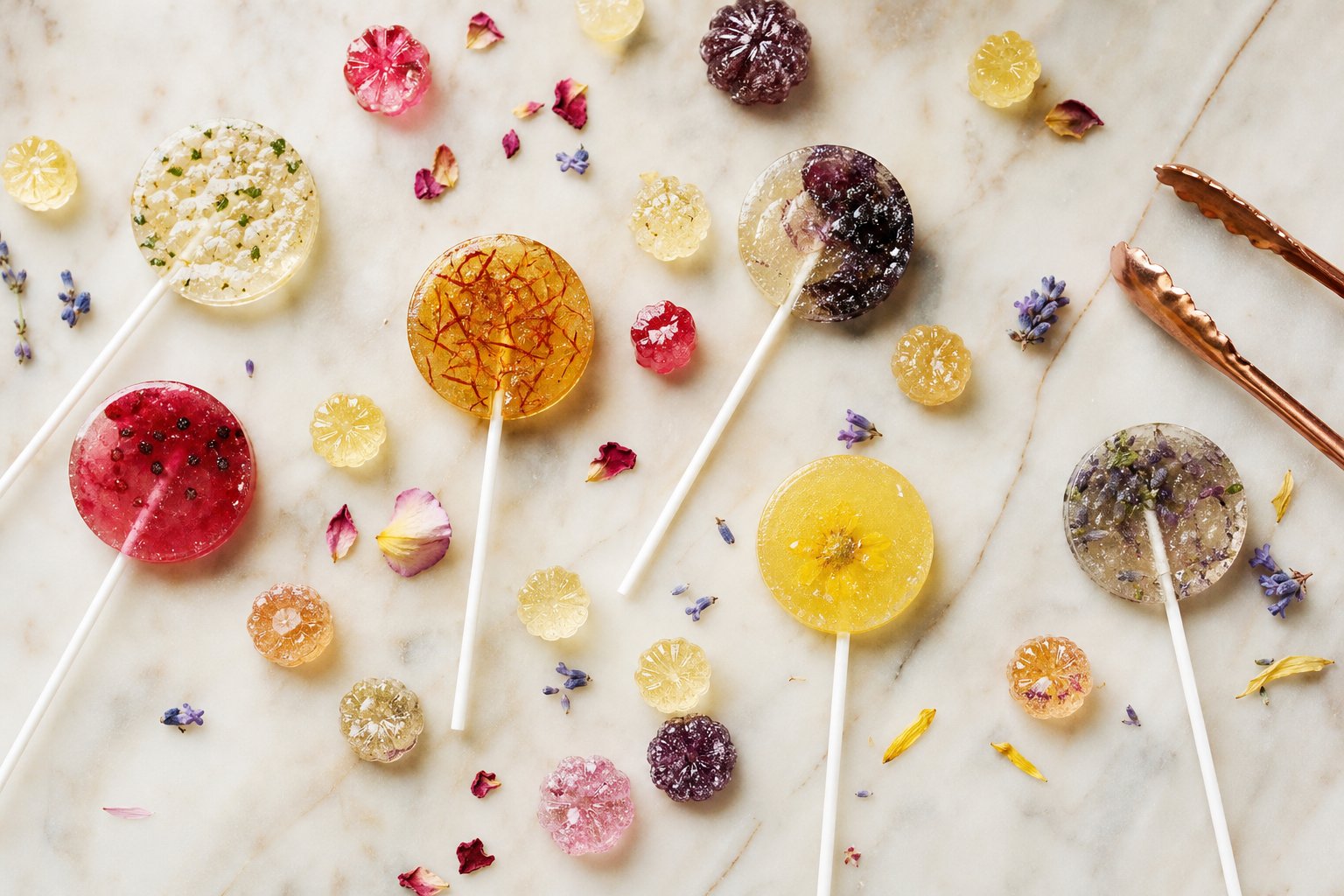
01 / Overview
What makes a candy feel artisanal?
“Artisanal” is not a regulated flavor or a promise of a particular ingredient. In this guide, it describes candy made with deliberate attention to formulation, cooking, texture, and finishing—often in small batches where a maker can adjust a recipe by sight, temperature, and taste.
A distinctive flavor is more than novelty. Yuzu, culinary lavender, smoked cherry, cardamom, or a pinch of mineral salt work best when they support the candy’s sweetness rather than cover it. The most memorable sweets usually balance four things: aroma, initial taste, lingering finish, and texture.
Judge a candy by how clearly its ingredients are described, how evenly it is cooked, how cleanly it finishes, and whether its packaging gives practical storage and allergen information.
Four signals of thoughtful candy making
- Specific ingredients. Named fruit, spices, extracts, and coloring sources are easier to evaluate than vague “natural flavoring” alone.
- Controlled texture. Hard candy should be glossy and brittle, not tacky; chewy candy should hold its shape without sticking to the wrapper.
- Balanced intensity. Botanical and smoke notes are potent; a restrained hand usually tastes more refined.
- Practical labeling. Clear allergen, storage, and best-by information helps you make an informed choice.
| Flavor family | Typical impressions | What to check |
|---|---|---|
| Citrus & mineral | Bright, fragrant, clean finish | Fruit peel, juice, or extract; added salt |
| Floral & honey | Perfumed, rounded, gentle | Culinary-grade botanicals; intensity |
| Fruit & cocoa | Deep, tart, bittersweet | Real fruit, cacao, or flavorings |
| Spice & orchard fruit | Warm, aromatic, mellow | Whole spices, pear, apple, or quince |
02 / Flavor map
Four unusual flavor directions worth understanding
These profiles are illustrative tasting concepts, not product listings. Use them as vocabulary for reading a maker’s description and comparing candies side by side. Add any profile to your personal tasting list below.
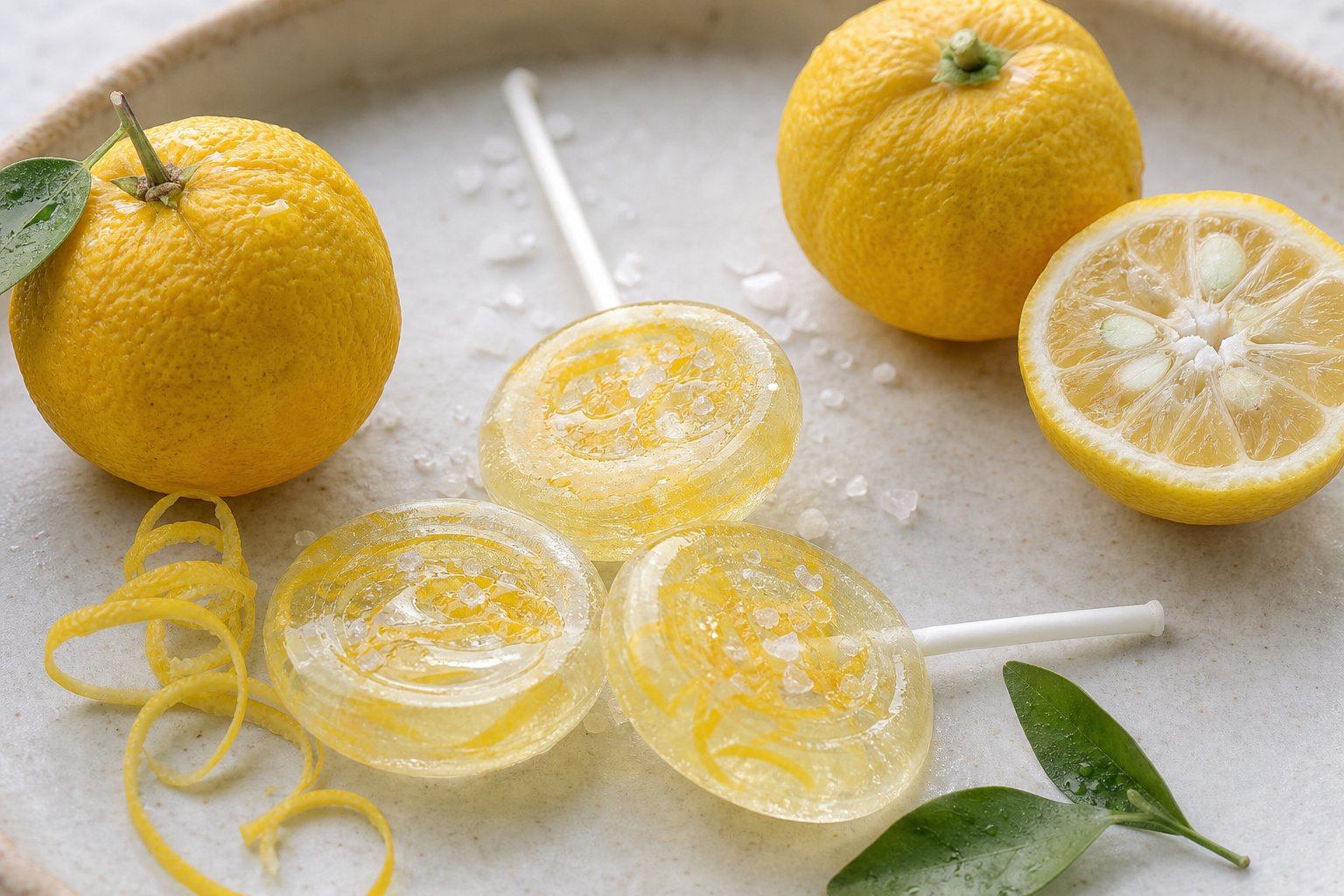
Bright / mineral
Yuzu & Sea Salt
Yuzu brings a fragrant intersection of lemon, mandarin, and grapefruit. A small amount of salt can make the citrus read as sharper and more rounded at once, especially in a clear hard candy.
- Aroma
- Fresh peel
- Texture
- Clear, crisp
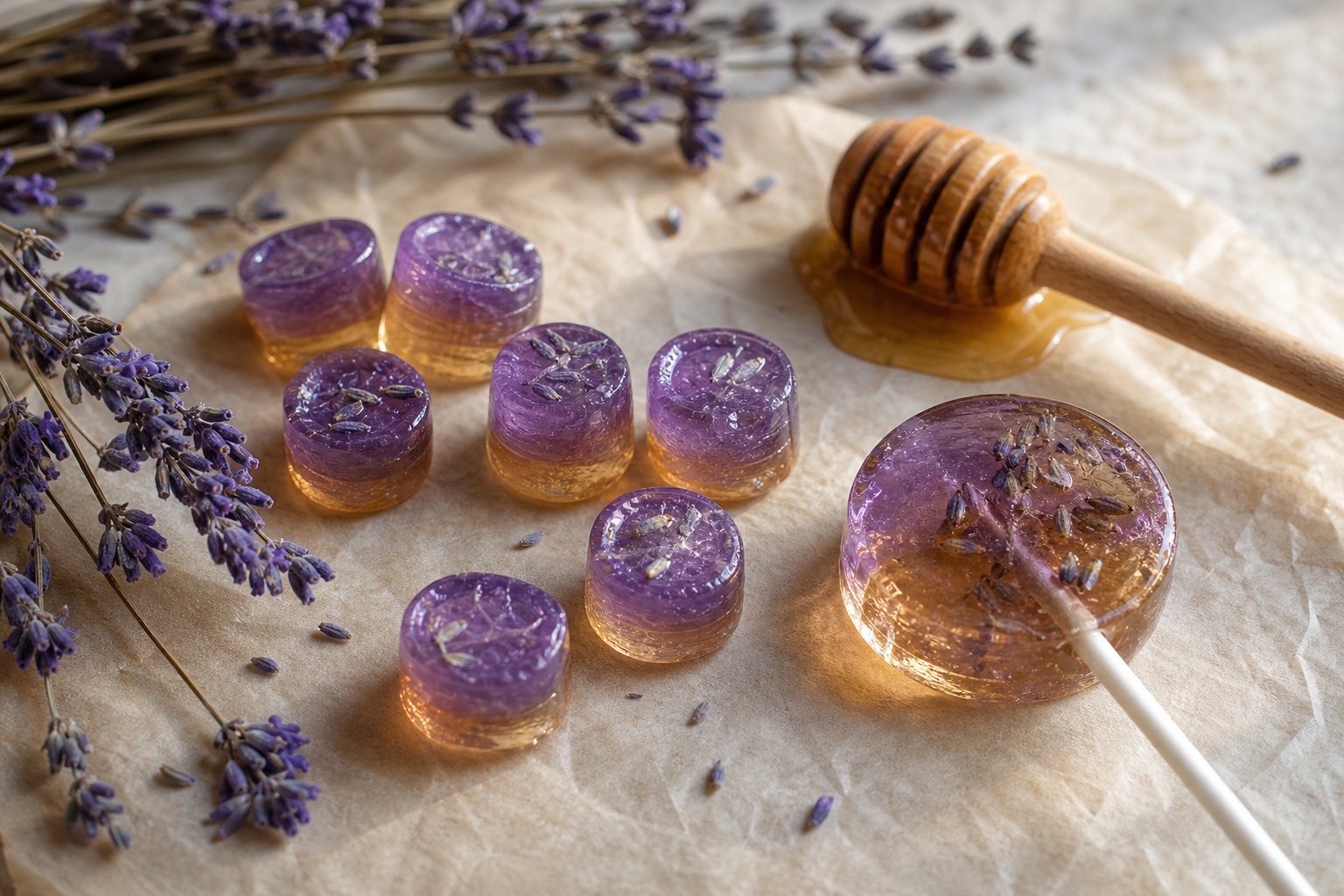
Floral / rounded
Lavender & Honey
Culinary lavender is intensely aromatic, so the best versions tend to use a light infusion. Honey adds a soft, round sweetness that keeps the floral note from feeling sharp or soapy.
- Aroma
- Herbaceous
- Texture
- Smooth, glassy
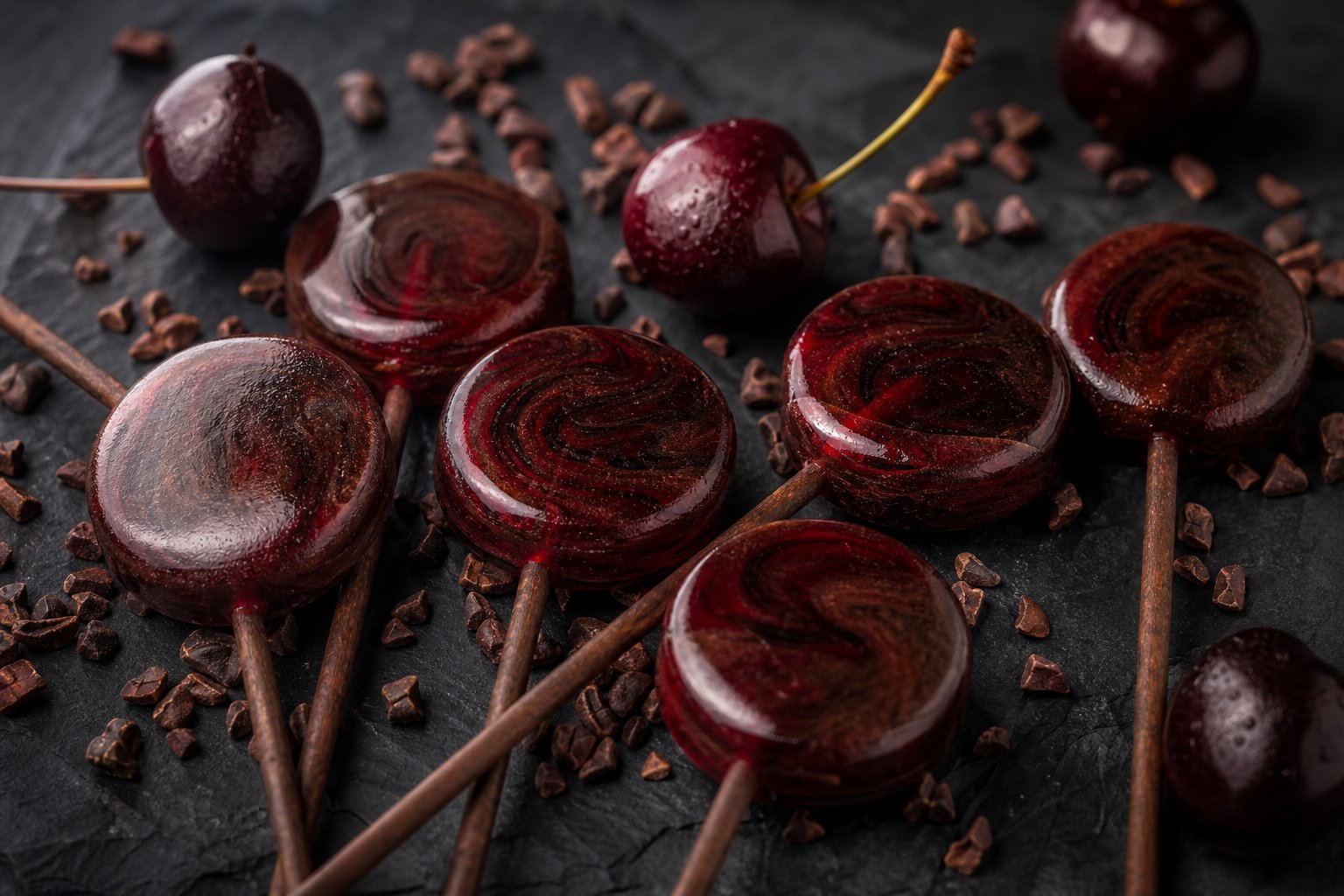
Dark / layered
Smoked Cherry & Cocoa
Cherry offers acidity and deep fruit, while cacao nibs contribute bitterness and roasted aroma. A restrained smoky note can add depth, but too much can flatten the fruit’s brightness.
- Aroma
- Roasted fruit
- Texture
- Glossy, firm
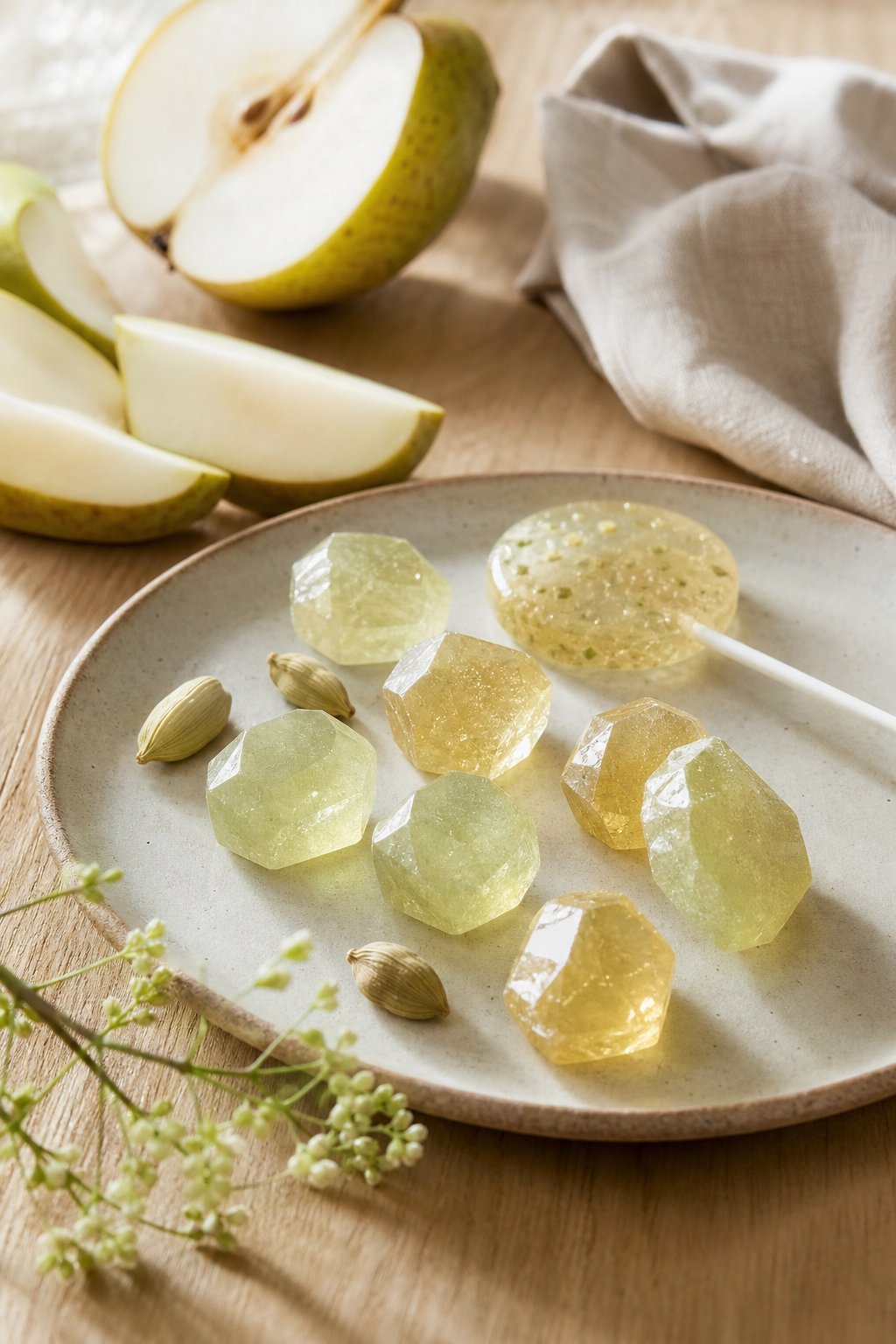
Warm / orchard
Cardamom & Pear
Cardamom has a citrusy, gently eucalyptus-like lift. Paired with pear, it creates a softer profile than citrus: mellow sweetness first, then a cool spice finish.
- Aroma
- Green spice
- Texture
- Faceted, tender
Flavor concepts vary by maker. Always read the actual ingredient list and allergen statement before tasting, especially if you have dietary restrictions.
03 / Interactive tool
Build a personal tasting list
Select the profiles above, then copy, email, or download your shortlist. If you allow optional browser storage, the list is remembered on this device; otherwise it remains only for this page view.
Your flavors 0 selected
- No flavors selected yet.
04 / Craft
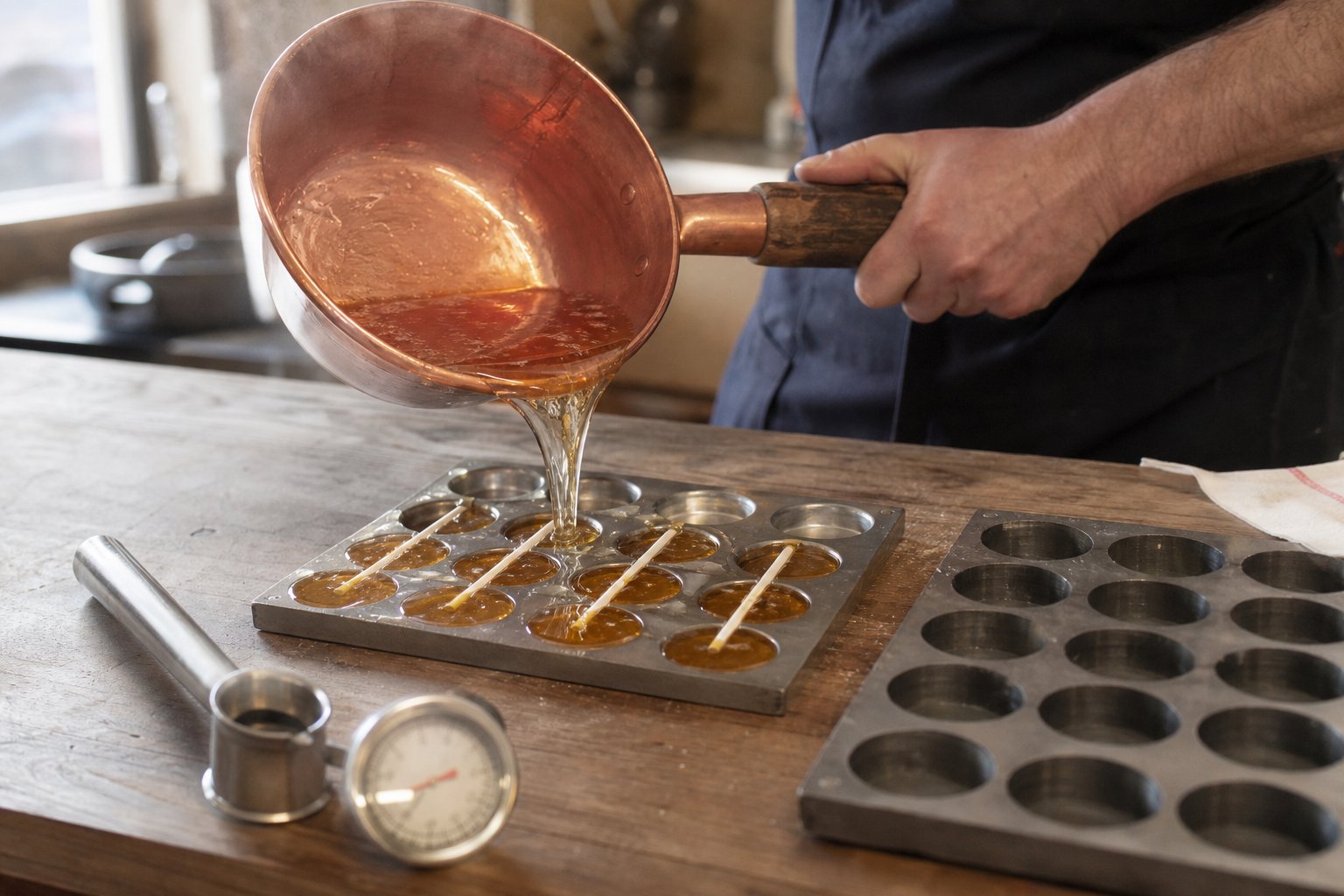
How a small-batch lollipop comes together
The broad method is simple, but small choices matter. Sugar is dissolved, the syrup is cooked to a target temperature, flavor and color are added at a stage that suits their volatility, and the candy is portioned before it cools into a stable glass-like texture.
- Dissolve and clarify. Sugar and a liquid are heated until the crystals dissolve evenly. Gentle handling helps avoid premature crystallization.
- Cook to temperature. A thermometer gives a repeatable indication of water content. Humidity and altitude can still affect the result.
- Add flavor deliberately. Delicate botanical or citrus aromas are often introduced later, when the syrup is hot enough to blend but not so hot that the aroma disappears.
- Portion and cool. The syrup is poured into molds or shaped by hand, sticks are set, and candies cool on a level surface before wrapping.
- Wrap against moisture. Hard candy readily absorbs water from the air, so prompt, tight wrapping protects clarity and crunch.
05 / Practical guide
Choosing, serving, and storing unique candies
Read beyond the headline flavor
Look for the actual flavoring source, sweeteners, colors, and allergen statement. “Inspired by” and “made with” do not mean the same thing.
Taste from mild to intense
Start with fruit or honey profiles before smoke, spice, and botanical flavors. Water or an unsalted cracker can help reset your palate between candies.
Keep moisture out
Follow the package’s best-by and storage directions. Keep hard candy sealed, cool, and dry; a sticky surface is often a sign of humidity exposure.
Serve with context
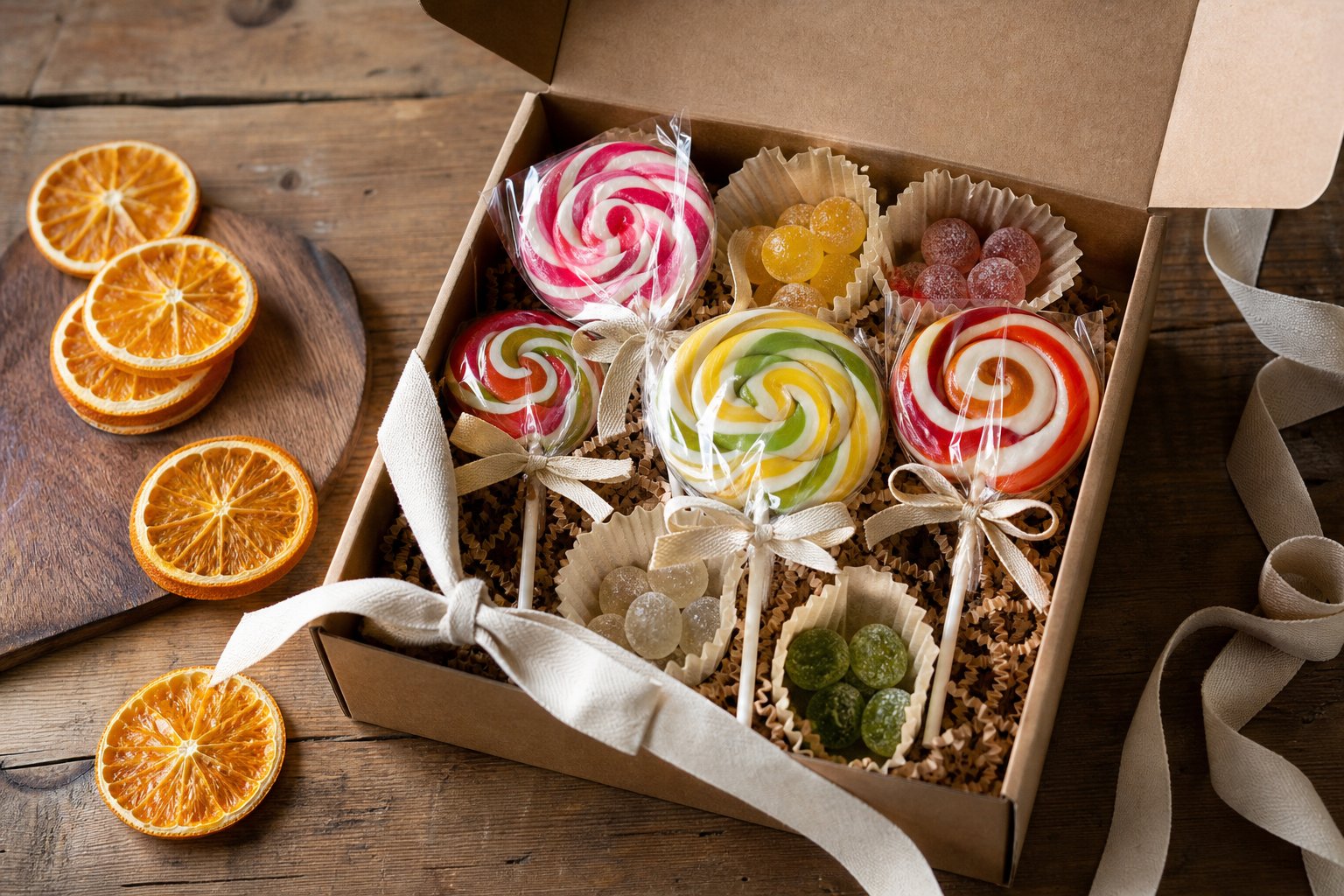
A short flavor card, a clear wrapper, and a sensible portion make unusual flavors easier to enjoy. Offer allergen details alongside any shared candy.
Questions to ask a maker
- Which ingredient provides the main flavor, and is it an extract, infusion, juice, or spice?
- Is the color naturally derived, added, or simply the result of the syrup?
- What allergens are present in the recipe or the production kitchen?
- How should the candy be stored, and what is the best-by date?
- Is the texture hard, chewy, or filled—and does that suit the people who will eat it?
Hard candies can be a choking risk for young children. Check age guidance and supervise accordingly.
06 / FAQ
Frequently asked questions
Do unusual flavors mean the candy is savory?
Usually not. Ingredients such as salt, herbs, smoke, or spice are often used in small amounts to shape sweetness and aroma. The ingredient list and maker’s description are the best guide to intensity.
How long do artisanal candies keep?
Follow the best-by date and storage instructions on the package. Recipes and wrapping differ, so a single universal shelf life is not reliable. Discard candy with an unexpected odor, visible moisture damage, or compromised packaging.
Are floral or botanical candies always made with real flowers?
No. Some makers use culinary infusions, others use extracts or flavorings. Look for specific wording and contact the maker when you need clarification.
What should I check for allergies or dietary needs?
Read the full label and the maker’s cross-contact statement. Common considerations include milk, nuts, soy, and certain colorings. Do not rely on a flavor name as a substitute for an allergen statement.
Does this site sell the candies shown?
No. The Sugar Atlas is an informational editorial guide. The photographs are original illustrative imagery, and there is no checkout, account, or order processing on this site.
07 / Contact
Ask a flavor question
Have a question about this guide or a suggestion for a future flavor note? Prepare a plain-text email draft below. Nothing is transmitted from this page until you choose an email option and send the message yourself.
Contact details
1842 Willow Lane, Suite 6Portland, OR 97209
United States
Email is the preferred contact method for this editorial site.